
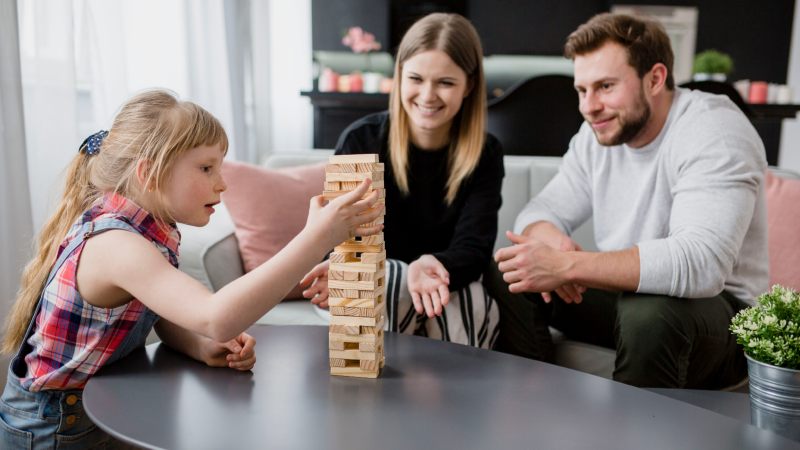
Children learn best when they are interested, engaged, and encouraged to explore the world around them. Play provides an excellent opportunity for children to develop important skills while enjoying meaningful activities with parents, teachers, and friends. From puzzles and memory challenges to creative projects and outdoor adventures, games can make learning an enjoyable part of everyday life.
Learning games FamParentLife is a useful topic for parents who want to combine entertainment with educational activities at home. By choosing games that match a child’s age, interests, and abilities, families can encourage curiosity, improve problem-solving skills, and support healthy development. These activities do not require expensive toys or complicated equipment. Many effective learning experiences can be created using household objects, books, paper, and everyday conversations.
This article explores the benefits of educational games, different types of activities, and practical ways parents can incorporate playful learning into their children’s daily routines.
Why Learning Through Play Matters
Play is an important part of childhood because it allows children to discover new ideas through direct experience. Rather than simply listening to instructions, children can experiment, make decisions, solve problems, and learn from mistakes.
Educational games can introduce basic academic concepts, including numbers, letters, colors, shapes, and vocabulary. They also encourage children to practice patience, follow instructions, and communicate their thoughts. These abilities contribute to school readiness and lifelong learning.
For example, a simple counting game using building blocks can help a young child understand numbers while improving coordination. A matching game can encourage concentration and memory, while a pretend grocery store can introduce counting, organization, and everyday communication.
Parents can explore learning games FamParentLife to discover practical ways of making these experiences part of family life. The most effective activities are often those that allow children to participate actively, ask questions, and enjoy the learning process without feeling pressured.
Types of Educational Games for Children
Different games support different abilities. Offering a variety of activities helps children develop a broad range of skills while keeping their daily routines interesting.
1. Number and Counting Games
Mathematical thinking begins with simple activities that help children recognize quantities, compare objects, and understand basic patterns.
Parents can ask children to count toys, sort buttons by size, or identify numbers on household items. Older children may enjoy board games that involve adding scores, counting spaces, or solving simple mathematical challenges.
A useful activity is to place several objects on a table and ask a child to count them. Next, remove one or two objects and ask how many remain. This introduces basic subtraction through a practical demonstration.
These activities help children connect mathematical concepts with familiar experiences. Keeping the games short and gradually increasing their difficulty can make learning more enjoyable.
2. Reading and Vocabulary Games
Language games help children recognize words, expand vocabulary, and improve communication. Parents can introduce letter cards, picture books, rhyming activities, and storytelling challenges.
One simple game involves naming an object and asking the child to describe its color, shape, purpose, or location. Another option is to choose a letter and invite children to name as many words as possible that begin with it.
Storytelling is equally valuable. Parents can begin a story with a few sentences and ask the child to invent what happens next. This encourages imagination, listening, and the ability to organize ideas.
For children who are learning to read, matching picture cards with written words can reinforce recognition. Activities should suit each child’s current reading level so that challenges remain manageable rather than frustrating.
3. Memory and Matching Games
Memory games encourage children to pay attention to details and remember information. They can also support concentration and visual recognition.
A traditional matching game uses pairs of cards placed face down. Children turn over two cards at a time and try to find matching pictures. Parents can make their own version using drawings, printed images, or familiar household objects.
Another activity involves placing several items on a tray and allowing the child to observe them briefly. Cover the tray, remove one item, and ask the child to identify what is missing.
Start with a small number of objects and introduce more as the child becomes comfortable. The purpose is to encourage practice and confidence, not to test children under pressure.
Creative Games That Encourage Imagination
Creative activities give children opportunities to express themselves, explore ideas, and experiment with different materials. They can also encourage independent thinking.
Art and Craft Activities
Drawing, painting, paper folding, and simple construction projects allow children to develop creativity while practicing fine motor skills. Parents can provide safe materials and suggest a theme, such as designing a dream house or creating an animal from recycled cardboard.
Instead of insisting that every project look a certain way, encourage children to make their own choices. Ask them to explain their designs and describe how they created them.
These conversations can build confidence and communication skills while helping children appreciate their own ideas.
Pretend Play and Role-Playing
Pretend play allows children to explore familiar situations in an imaginative setting. A pretend restaurant, classroom, hospital, or grocery store can introduce useful concepts through everyday scenarios.
For instance, children playing shopkeeper can practice counting pretend money, organizing products, and greeting customers. Taking turns as the buyer and seller introduces cooperation and communication.
Role-playing can also help children understand emotions and social situations. Parents can use dolls or puppets to demonstrate sharing, resolving disagreements, and asking for help.
Outdoor Games for Active Learning
Learning does not need to happen indoors. Outdoor activities allow children to explore nature, move their bodies, and discover how the environment works.
A nature scavenger hunt is a simple option. Parents can prepare a list of things to find, such as a smooth stone, a fallen leaf, a bird, or a flower. Children can observe their surroundings while practicing classification and descriptive language.
Garden activities provide opportunities to learn about plants, weather, insects, and responsibility. Children can help water plants, observe changes in leaves, or measure how much a plant grows over time.
Movement games can also introduce educational concepts. For example, parents can ask children to take five steps forward, jump three times, or identify objects of a particular color.
Choose safe locations, supervise children appropriately, and adjust physical activities to their abilities. Outdoor learning is most effective when children have room to explore while understanding basic safety rules.
How to Choose Age-Appropriate Learning Activities
Selecting the right activity helps children remain interested and reduces unnecessary frustration. A game that is too easy may quickly become boring, while one that is too difficult may discourage participation.
For toddlers and preschoolers, focus on simple matching, sorting, counting, colors, shapes, and sensory exploration. Use large, age-appropriate materials and avoid objects that could create choking hazards.
Early school-age children may enjoy word puzzles, simple science experiments, beginner board games, and activities involving basic addition or subtraction. These games can encourage independence while reinforcing classroom learning.
Older children may prefer strategy games, more challenging puzzles, research projects, and activities that require planning. They can also help design games for younger siblings, which encourages responsibility and cooperation.
Parents should consider individual interests as well. A child who enjoys animals might respond enthusiastically to wildlife puzzles, while a child interested in building may prefer construction challenges.
The goal is to provide an appropriate balance of challenge, enjoyment, and achievable progress.
Practical Tips for Parents
Creating a supportive learning environment does not require a strict schedule or a large collection of educational toys. Small changes to everyday routines can make a meaningful difference.
Keep Activities Short and Enjoyable
Children have different attention spans, so begin with manageable sessions. A short game that ends on a positive note may be more productive than a lengthy activity that leaves everyone tired.
Allow children to take breaks and change activities when appropriate. Interest and engagement are important signs that a game is working well.
Encourage Effort Instead of Perfection
Praise children for trying, asking questions, and exploring different solutions. When they make mistakes, treat them as opportunities to learn rather than reasons for criticism.
For example, if a child answers a counting question incorrectly, count the objects together and explain the result calmly. This approach can help children become more comfortable with challenges.
Participate Without Taking Control
Parents can demonstrate how a game works, offer helpful questions, and provide encouragement. However, children should have opportunities to make decisions and discover solutions independently.
Questions such as “What do you think will happen next?” or “Can you find another way to solve this?” encourage reasoning without giving away every answer.
Balance Screen-Based and Offline Activities
Digital educational games can support learning when selected carefully. Look for age-appropriate content, clear educational goals, and features that encourage active participation rather than constant passive viewing.
Nevertheless, children also benefit from physical play, conversation, reading, and time outdoors. A balanced routine offers different ways to learn and interact with others.
Parents should review online content, use suitable privacy and safety settings, and follow age-appropriate screen-time guidance.
Common Mistakes to Avoid
Although educational games offer many benefits, parents should avoid turning every play session into a formal lesson. Children need time for unstructured play, imagination, and relaxation.
Another common mistake is comparing siblings or classmates. Every child develops skills at a different pace, and comparisons may reduce confidence. Focus instead on individual progress and personal interests.
Parents should also avoid selecting activities solely because they appear educational. A game is more likely to be useful when it suits the child’s abilities and encourages genuine participation.
Finally, do not assume that expensive products are necessary. Homemade puzzles, storytelling, counting household objects, and outdoor exploration can provide valuable learning opportunities at little or no cost.
Building a Consistent Family Learning Routine
Consistency helps children become familiar with learning activities and look forward to shared time with their families. Parents can set aside a few minutes each day for reading, puzzles, creative projects, or simple educational challenges.
For example, a family might enjoy a word game after dinner, a counting activity while preparing food, or a nature walk during the weekend. These small routines allow children to practice skills without making learning feel like an additional burden.
Families can also invite children to choose the next activity. Giving them a voice encourages independence and makes the experience more engaging.
Parents seeking fresh ideas can use learning games FamParentLife as inspiration for building a flexible collection of activities suited to their household. Keeping a few favorite games available makes it easier to introduce playful learning whenever an opportunity arises.
Conclusion
Educational games offer families a practical way to support children’s development while making everyday experiences more enjoyable. Counting challenges, vocabulary activities, memory puzzles, creative projects, pretend play, and outdoor exploration can all encourage important skills.
The best approach is to choose age-appropriate activities, remain patient, celebrate effort, and give children opportunities to explore independently. Parents do not need expensive equipment or complicated lesson plans to create meaningful learning experiences.
With a little creativity and consistency, families can make play an enjoyable part of everyday life. By exploring learning games FamParentLife, parents can find inspiration for activities that encourage curiosity, strengthen family connections, and help children develop confidence as they discover the world around them.